Antigua Diving and Snorkeling Guide: Reefs and Wrecks
Antigua diving and snorkeling guide: Cades Reef, the Andes wreck, Stingray City, shore-snorkel beaches, PADI operators, courses, and when conditions are best.
Antigua pairs shallow fringing reefs you can swim to from the sand with historic wrecks and boat-access dive sites, in water warm enough to skip a thick wetsuit most of the year. You do not need certification to snorkel the reef off Dickenson Bay or the wreck of the Andes in Deep Bay, and if you do want to dive, PADI operators in English Harbour and Jolly Harbour run everything from a one-off Discover Scuba dive to full certification.
This guide covers the signature sites (Cades Reef, the Pillars of Hercules, the Andes wreck, and Stingray City), the best shore snorkeling beaches, operators and courses, seasonal conditions, and the reef etiquette and marine reserve rules that keep Antigua's water this clear.
What Makes Antigua Diving and Snorkeling Distinct
Antigua and Barbuda combine colorful fringing reefs, coral gardens, drop-offs, and well-preserved historic wrecks, with conditions gentle enough for first-time snorkelers and beginner divers. Antigua is particularly known for its wrecks, while Barbuda's sites see far less traffic. A shallow fringing reef rings much of Antigua, so good snorkeling is often a short swim from the beach, unusual for the Eastern Caribbean. Most dive centers cluster on the calmer south and west coasts, English Harbour and Falmouth on the south side, Jolly Harbour on the west, close to Cades Reef and the Pillars of Hercules.
Cades Reef: Antigua's Signature Barrier Reef
Cades Reef is a barrier reef running roughly two miles (about three kilometers) parallel to the southwest coast, off Cades Bay near Old Road, about a quarter mile offshore. It is reached by boat rather than by swimming from the beach, with most trips launching from Jolly Harbour and other west-coast points. Depth varies considerably, from shallow patches to much deeper sections, so operators can match a dive or snorkel to different experience levels on the same outing. Expect stingrays, lobster, parrotfish, surgeonfish, wrasse, and occasionally turtles.
The whole area, including mangrove wetlands, seagrass beds, and turtle-nesting beaches, was designated Cades Bay Marine Reserve in 1999, covering about 18 square kilometers under the Fisheries Division. Fishing, taking marine life, dredging, and discharging waste are all illegal here, a large part of why the reef has stayed in good condition.
One operator, Sea Cat Discoveries, runs a drift snorkel along the two-mile barrier reef (or an alternative shipwreck trip) on a 25ft Panga-style boat with pickups from most west-coast hotel beaches. As of 2026 the operator lists its three-hour Snorkel and Beach Exploration tour at about US$400 for one to four people, each additional person around US$75; confirm current pricing directly. Cades Bay Beach itself is calm for a swim, but the reef is well offshore, so reaching it means booking a boat.
Pillars of Hercules: A Boat Dive You Can Also Hike To
The Pillars of Hercules are eroded limestone columns at the entrance to English Harbour, inside Nelson's Dockyard National Park below Shirley Heights. It is a shallow site, roughly 4 to 15 meters (13 to 50 feet), accessible to certified divers of all levels, and snorkelers are welcome too. PADI lists it as boat-access only, with local operators holding private moorings there. Marine life includes green turtles, spotted eagle rays, octopus, and reef fish such as trumpetfish and parrotfish, alongside a centuries-old anchor and a coral nursery program growing new coral since 2021.
There is also a land route, for the adventurous. From Galleon Beach at the mouth of English Harbour, walk to the end of the beach and around the point, then scramble over large, slippery boulders for roughly a 30-minute walk each way. Best attempted at low tide, and expect to get wet by the end; from the farthest walkable point, some visitors snorkel the rest of the way out to the pillars.
The Andes Wreck in Deep Bay: A Shore-Snorkelable Shipwreck
The Andes was a three-masted sailing barque built in 1874 that sank in Deep Bay in June 1905, after a cargo of pitch bound for Chile overheated and caught fire, forcing the ship into Antigua before it went down. It now lies upright in shallow water, roughly 8 to 10 meters (25 to 30 feet) deep, close enough to snorkel out to directly from the sand, one of the few shore-accessible wreck snorkels in Antigua. Deep Bay sits on the Five Islands peninsula and is nearly fully enclosed, so the water stays calm and clear, overlooked by Fort Barrington on the northern headland. The wreck and surrounding waters are protected under the Marine Areas Act of 1972, so nothing may be removed.
Stingray City: A Guided Encounter in the North Sound
Stingray City is a shallow sandbar in the North Sound off the northeast coast near Seatons village, reached by a short speedboat ride of about 5 to 10 minutes. Visitors stand waist-deep in warm, clear water while habituated southern stingrays glide around them, and guides teach safe handling: hold flat-palmed and never grab the tail. The sandbar is shallow enough to stand on, so non-swimmers can join too.
Most Stingray City tours add a snorkel over a nearby reef afterward, spotting parrotfish, sergeant majors, and occasionally turtles or starfish, plus rum punch on the ride back. Total time runs roughly 2 to 3 hours, minimum age 4, one of the more family-friendly water activities on the island. Third-party listings put entry-level tours at roughly US$60 to US$70 per person as of 2026, combination tours closer to US$100; book directly to confirm current pricing.
These waters fall within the North Sound, a reef-sheltered cluster of islets, mangroves, and seagrass the site calls North Sound Marine Park, officially the Northeast Marine Management Area, a Marine Reserve since 2005 that also protects the critically endangered Antiguan racer snake and nesting hawksbill turtles. Great Bird Island sits inside the same zone. Conditions are calmest from December to April, and boat operators use mooring buoys rather than anchors.
Best Snorkeling Beaches From Shore
Not every good snorkel in Antigua needs a boat. These are the beaches where you can wade or swim out and see something worth the trip.
| Beach | Shore snorkel | What you will see |
|---|---|---|
| Deep Bay Beach | Yes, direct to the wreck | The Andes wreck, calm enclosed bay |
| Galleon Beach | Yes, reef just offshore | Hawksbill turtles grazing seagrass, reef fish, occasional rays |
| Dickenson Bay | Yes, fringing reef close to shore | Colorful reef fish and coral in short swims from the sand |
| Green Island | Boat-access only, then shore-style snorkel | Clear water, coral, abundant fish on an uninhabited island |
| Cades Bay Beach | No, reef is well offshore | Calm swimming; book a boat for Cades Reef itself |
| Pigeon Point Beach | Limited | Calm, shallow, family-friendly water rather than a snorkel highlight |
Galleon Beach in Freeman's Bay is one of the best all-around picks, reached by a short boat ride or a scenic walk from Nelson's Dockyard, though road parking is limited. Dickenson Bay's coral fringe sits close to shore (the further-out spot locals call Paradise Reef needs a kayak or paddleboard, not a pure shore swim). Green Island, near Long Bay and Nonsuch Bay, is boat-access only but rewards the trip with an uninhabited island with no facilities.
Dive Operators and Certification Courses
Antigua's dive shops cluster around English Harbour and Jolly Harbour, running everything from a single Discover Scuba try-dive to full Open Water certification.
- DiveCarib (English Harbour): called Antigua's only independent five-star PADI facility by the national tourism authority, with guided dive tours, certification courses, and technical diving for all levels.
- Indigo Divers (Jolly Harbour): operating since 2005, run by PADI professionals, courses in English and German, dives on the sheltered west and south coast including Cades Reef, most sites about 20 minutes away.
- Antigua Scuba School (Jolly Harbour, at Bodog Beach Club): founded by three instructors with over 30 years of combined teaching experience, instruction from beginner through professional level.
Not sure diving is for you? A PADI Discover Scuba Diving (DSD) session is the low-commitment way to try it: a non-certification dive for first-timers, minimum age 10, no experience needed, depth capped at 12 meters (40 feet), always supervised by a PADI professional. If you enjoy it, a full Open Water certification adds confined-water and open-water dives to the classroom work; at one operator (DiveCarib) the in-water portion runs about three days after separate eLearning. As of 2026, that operator lists the practical portion at about US$599 plus US$246 eLearning (roughly US$845 total), Advanced Open Water from about US$450, and Discover Scuba from about US$159; confirm current rates directly.
When to Go: Conditions and Seasons
Sea temperature ranges roughly 25 to 26C (77 to 79F) in the coolest months, December through February, up to about 28 to 30C (82 to 86F) in the warmest months, June through September, warm enough for most divers in a 3mm shorty wetsuit year-round.
Visibility is best in the dry season, roughly December through April or May, commonly exceeding 25 to 30 meters (80 to 100 feet) with calm seas. In the wetter months, June through November, diving remains viable, with visibility commonly around 15 to 30 meters (50 to 100 feet), and warmer water can increase marine-life activity even as clarity drops slightly.
Sargassum seaweed typically arrives May through August, peaking in June and July, affecting Atlantic-facing east-coast beaches most in heavy years, while Caribbean-side west and southwest beaches stay largely clear. It floats on the surface, so it mainly affects shore entry rather than deep-water visibility, but a heavy bloom is a real deterrent, so favor leeward west and south coast sites during peak bloom months.
Reef Etiquette and Safety
Antigua's reefs have stayed in good condition partly because of straightforward rules every diver and snorkeler should follow. Never touch, stand on, or step on coral: each polyp is a living organism, and even light contact causes lasting damage. Do not chase or grab marine life, including the stingrays at Stingray City, and expect boats to use a mooring buoy rather than an anchor over reef.
Mineral sunscreens with zinc oxide or titanium dioxide are not linked to coral harm, while chemical sunscreens containing oxybenzone, octinoxate, and octocrylene contribute to coral bleaching and are banned in some nearby jurisdictions, including the US Virgin Islands since 2020; Antigua has no formal ban of its own, but a rash guard and UPF swimwear cut down on reef runoff either way. Caribbean reef sharks and nurse sharks are present and regularly noted at several dive sites, both non-aggressive toward humans, with serious incidents anywhere in the Caribbean being rare. Lionfish, an invasive species, also turn up at some sites; leave them alone, both to protect the reef and because their spines are venomous.
These protections rest on the Marine Areas Act of 1972 and the Fisheries Act, under which both Cades Bay (1999) and the Northeast Marine Management Area (2005) were declared reserves. Inside them, fishing, taking marine life, dredging, discharging waste, unauthorized construction, and reef-damaging anchoring are all prohibited, with fines and other penalties for violations.
Diving and Snorkeling on Barbuda
Barbuda has little to no dedicated dive infrastructure, with no full-service dive shop on the island, so divers need to bring or arrange their own gear. It has a reputation for historic shipwrecks and very clear water, with Palmetto Point and Plasterer Point reported as worthwhile snorkel spots, though treat these as word-of-mouth rather than documented sites. Most visitors arrive on the Barbuda Express, a catamaran crossing in about 90 minutes each way, and a typical Barbuda day trip pairs the frigate-bird colony with beach time to swim or snorkel, so snorkeling here is opportunistic and beach-based. For serious diving, Antigua's own operators give a far more complete experience.
Frequently Asked Questions
Is Antigua better for diving or snorkeling?
Antigua works well for both. Certified divers get boat-access sites like the Pillars of Hercules and Cades Reef, while snorkelers reach genuinely good reef and wreck sites directly from shore at beaches like Deep Bay and Dickenson Bay. Few Eastern Caribbean islands offer that much shore snorkeling alongside a developed dive scene.
Can beginners go scuba diving in Antigua?
Yes. A PADI Discover Scuba Diving session lets first-timers try a supervised dive with no certification or experience required, minimum age 10, depth capped at 12 meters (40 feet). If you enjoy it, the same operators run full PADI Open Water certification courses combining online learning with in-water training over about three days.
Do you need a boat to snorkel in Antigua?
Not always. The Andes wreck in Deep Bay and the fringing reef at Dickenson Bay are both snorkelable directly from the beach. Other standout sites, including Cades Reef and Green Island, are boat-access only, and the Pillars of Hercules can be reached by boat or on foot from Galleon Beach followed by a short snorkel.
When is underwater visibility best in Antigua?
Visibility is generally best in the dry season, from December through April or May, when it commonly exceeds 25 to 30 meters (80 to 100 feet) in calm conditions. The wetter months from June through November still offer viable diving, typically 15 to 30 meters (50 to 100 feet), with slightly reduced clarity but often more marine-life activity.
Are there sharks in the water around Antigua?
Yes, Caribbean reef sharks and nurse sharks are regularly noted at several dive sites, but both are non-aggressive toward humans and serious incidents anywhere in the Caribbean are rare. Most divers who see a shark in Antigua describe it as a distant, uneventful sighting.
Is Stingray City safe, and can non-swimmers join?
Stingray City takes place on a shallow sandbar in the North Sound where you stand waist-deep in the water, so non-swimmers can participate. Guides teach safe handling: hold the rays flat-palmed and never grab the tail. The minimum age is 4, making it one of the more accessible water experiences on the island.
Does sargassum seaweed affect diving and snorkeling in Antigua?
It can, mainly on Atlantic-facing east-coast beaches in the peak bloom months of June and July, affecting shore entry more than underwater visibility. Caribbean-side west and southwest sites, including those near Jolly Harbour and English Harbour, tend to stay largely clear, so favor those areas during sargassum season.
How long should I wait to fly after diving in Antigua?
PADI and the Divers Alert Network recommend waiting at least 12 hours after a single no-decompression dive before flying, and at least 18 hours after repetitive or multi-day diving. Plan your last dive with your departure flight time in mind, especially if you are diving right up until the end of a trip.
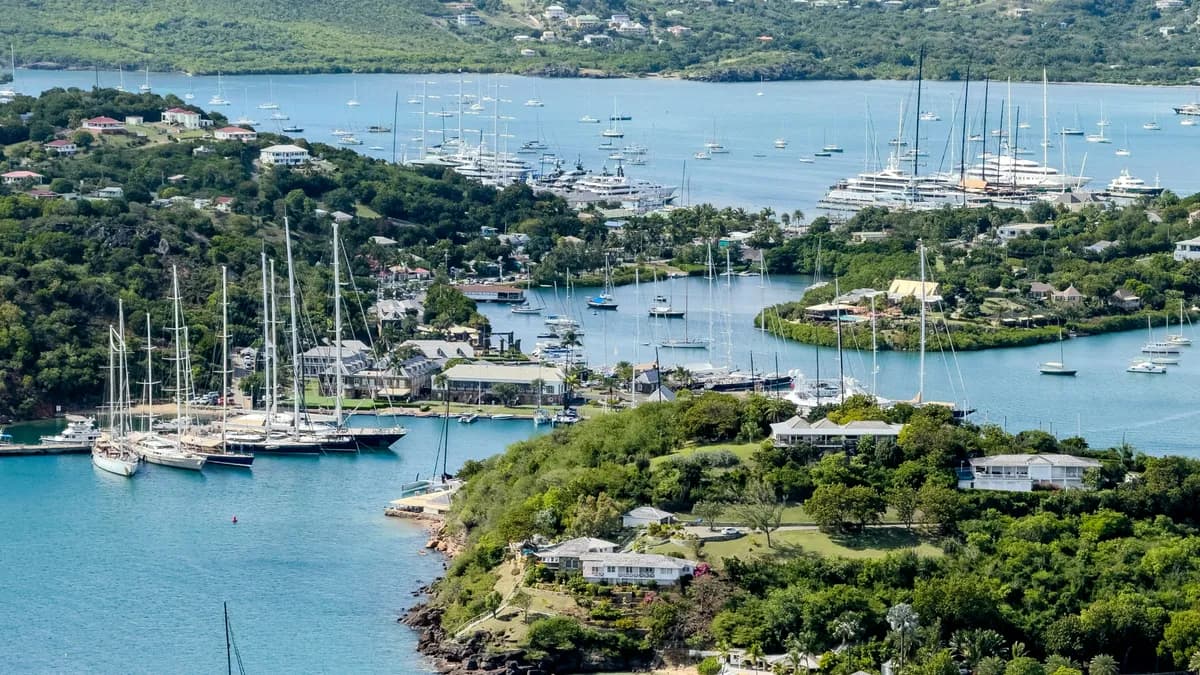
English Harbour & Falmouth
This guide covers English Harbour & Falmouth. Explore more about this destination.
View DestinationAbout the Author
Alex Borshch
Founder and editor of the Isla365 network. Spent six months living in the Dominican Republic over the 2013-14 winter, and has since wintered in Thailand, Vietnam and Turkey. Writes and edits the guides across the network.