Antigua Sailing & Yachting Guide
Antigua sailing centers on English and Falmouth Harbours, with steady 12 to 20 knot trade winds, bareboat and crewed charters, and anchorages out to Barbuda.
Antigua earns its reputation as the sailing capital of the Caribbean the moment you round the headland into English Harbour. Two deep, sheltered bays cut into the south coast, a Georgian naval dockyard still works as a marina, and the trade winds blow a steady 12 to 20 knots for most of the season. Add 365 beaches, dozens of protected anchorages, and a winter racing calendar that draws crews from Cowes to Newport, and you have an island built around the water. This guide covers where to base yourself, how to charter, the events worth planning a trip around, and the anchorages that make Antigua such an easy place to cruise.
Why Antigua Is a Sailing Capital
Three things put Antigua at the center of Caribbean sailing: geography, wind, and history. The island sits at the top of the Leeward chain, so it works as a natural staging point for boats arriving from across the Atlantic and as a launch pad for island-hopping south toward Guadeloupe or north to St. Barths. The east-coast trade winds are consistent enough that you rarely sit becalmed, yet the south and west coasts offer flat, protected water when you want a calm night at anchor.
The history is the part you can walk through. Nelson's Dockyard, named for Horatio Nelson, who was stationed here in the 1780s, is the only continuously working Georgian-era naval dockyard in the world and a UNESCO World Heritage Site since 2016. It anchors Nelson's Dockyard National Park, and the restored stone buildings now house chandleries, sail lofts, restaurants, and the dock offices that crews check into when they arrive. Spend an evening at the dockyard and you understand quickly why so much of the island's sailing culture is concentrated in this one corner of the south coast.
English Harbour and Falmouth Harbour: The Sailing Hub
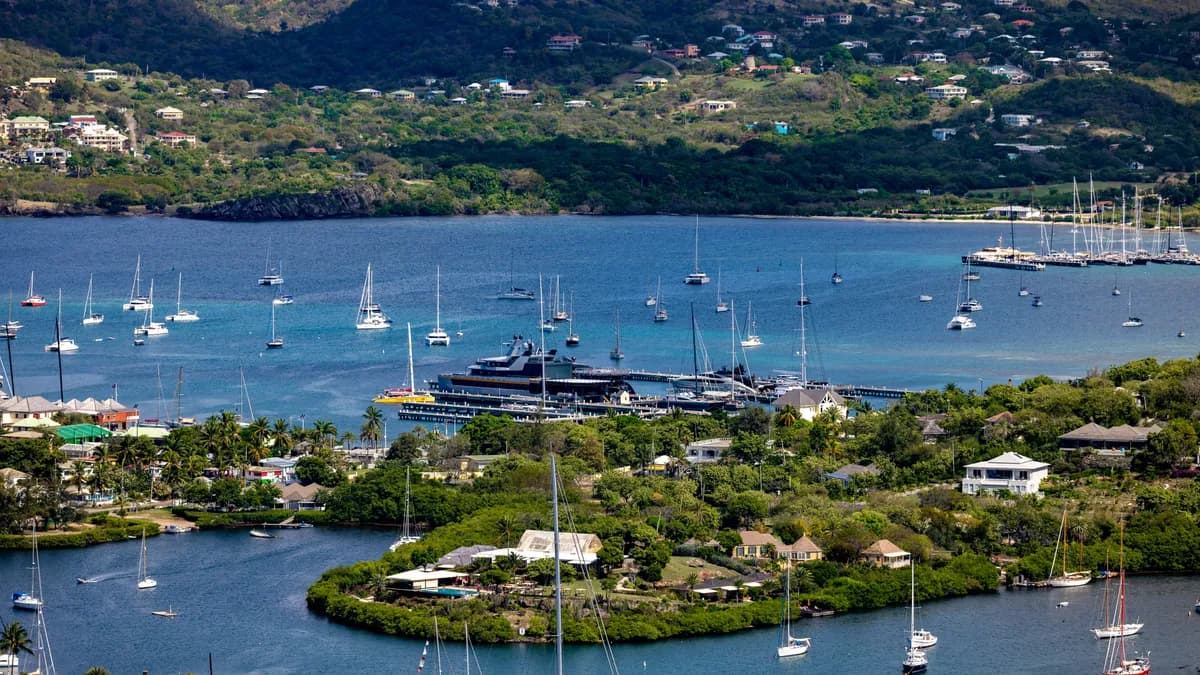
Nearly everything in Antiguan yachting orbits two adjacent bays on the south coast. They sit a short walk apart, and most visiting crews end up moving between them.
English Harbour
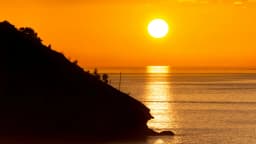
The smaller and more historic of the two, English Harbour is the home of Nelson's Dockyard and the heart of the racing scene. Superyachts med-moor stern-to along the dockyard wall, smaller boats anchor or pick up moorings, and the dockyard itself handles clearance, fuel, water, and provisioning. The classic sundowner is a hike up to Shirley Heights, the old military lookout above the harbour, for a view straight down onto the masts. The Sunday evening Shirley Heights party, with steel pan, a barbecue, and one of the best sunsets in the Caribbean, is a fixture for crews ashore.
Falmouth Harbour
Larger, deeper, and the main superyacht anchorage on the island, Falmouth Harbour sits just west of English Harbour over a low ridge. It has three full-service marinas, more space to anchor, and the bars and restaurants along the waterfront where the sailing crowd gathers after racing. During regatta season the two harbours fill with hundreds of boats, from classic wooden ketches to 100-foot racing machines. If you are chartering, Falmouth is often where the boat is based.
- Clearance: Customs and immigration for arriving yachts is handled at the dockyard in English Harbour. Have your boat papers, crew passports, and clearance from your last port ready.
- Provisioning: There are chandleries and small markets near both harbours, plus larger supermarkets a short taxi ride away. Stock up before heading to quieter anchorages or to Barbuda.
- Marine services: Sailmakers, riggers, mechanics, and haul-out yards cluster around Falmouth, which is why so many transatlantic boats refit here.
Chartering a Yacht: Bareboat vs Crewed
You do not need to own a boat or sail across an ocean to experience this. Antigua has a well-developed charter market, and the right option depends on your experience and how much you want to do yourself.
Bareboat charter
If you hold a sailing certification and have coastal cruising experience, a bareboat charter puts you in command of a monohull or catamaran for a week or more. Antigua's compact size and protected south and west coasts make it forgiving for a first Caribbean bareboat, and you can build a loop that takes in Jolly Harbour on the west coast, the beaches of the southwest, and an overnight at anchor without long open-water passages. Charter companies usually require a sailing resume and a briefing before they hand over the keys.
Crewed charter and day trips
For a fully hands-off trip, a crewed charter comes with a skipper and often a cook, so you do nothing but enjoy the sailing. If a full week afloat is more than you want, day options give you a taste: a catamaran day cruise along the coast with stops to swim, or a private sailing yacht charter for a half or full day. These are the easiest way to get on the water if you are based at a resort and just want an afternoon under sail. Pair a cruise with snorkeling on the reefs or a stop at Stingray City on the north-east coast.
The Racing Calendar: Regattas Worth a Trip
Antigua's winter and spring racing season is one of the reasons sailors return year after year. Three events stand out, and they cluster in the high season from February to early May. Dates shift slightly each year, so confirm the current schedule before booking.
RORC Caribbean 600
Held in late February (the 2026 edition starts on 23 February), the RORC Caribbean 600 is a 600-nautical-mile offshore race that starts and finishes off English Harbour and loops around 11 islands, from Barbuda and Nevis to Guadeloupe and back. It is a serious, non-stop ocean race that draws maxi yachts and top international crews. Even if you are not racing, the start off Fort Charlotte and the finish line arrivals are spectacular to watch from shore.
Antigua Classic Yacht Regatta
In mid-April (15 to 20 April in 2026), the Antigua Classic Yacht Regatta fills Nelson's Dockyard with vintage and traditional sailing yachts: gaff-rigged schooners, wooden ketches, and restored classics with acres of canvas. It is as much a celebration of craftsmanship as a race, and the dockyard backdrop makes it one of the most photogenic regattas anywhere.
Antigua Sailing Week
The headline event, Antigua Sailing Week, runs in late April into early May (22 to 26 April in 2026) and has been a fixture since 1968. It mixes competitive racing with a famous shore party scene around Falmouth and English Harbours. For 2026 the format moves toward a destination-style circumnavigation tracing the coastline, but the social heart of the event stays put. If you want the full Antigua sailing experience without a boat, book a room near the harbours and soak up the atmosphere. For a one-off spectacle, the Antigua Charter Yacht Show in December brings the superyacht fleet to the docks before the winter season.
Best Anchorages and Cruising Grounds
Once you are afloat, the island opens up. The south and west coasts offer the most sheltered anchorages, with calm water and easy beach access, while the north has its own draws. A typical week mixes a few of these:
- Carlisle Bay and Morris Bay (south): sheltered, scenic, with good holding. Carlisle Bay Beach and Morris Bay Beach sit at the foot of green hills near Fig Tree Drive.
- Five Islands and Hawksbill (west): a string of quiet bays near Five Islands, including Hawksbill Beach and the calm water off Galley Bay Beach.
- Deep Bay (west): a near-perfect protected anchorage with a shipwreck to snorkel and the ruins of Fort Barrington on the headland. Deep Bay Beach is a classic overnight stop.
- Jolly Harbour (west): a marina and lagoon community with a customs office, fuel, and provisioning, just north of Jolly Beach. A practical base on the calm leeward side.
- Green Island and Nonsuch Bay (east): a protected reef-fringed anchorage on the windward side, with Green Island Beach for a swim. Best reached in settled conditions.
- Dickenson Bay (north): a lively bay near Dickenson Bay with restaurants ashore and Dickenson Bay Beach for a busier evening.
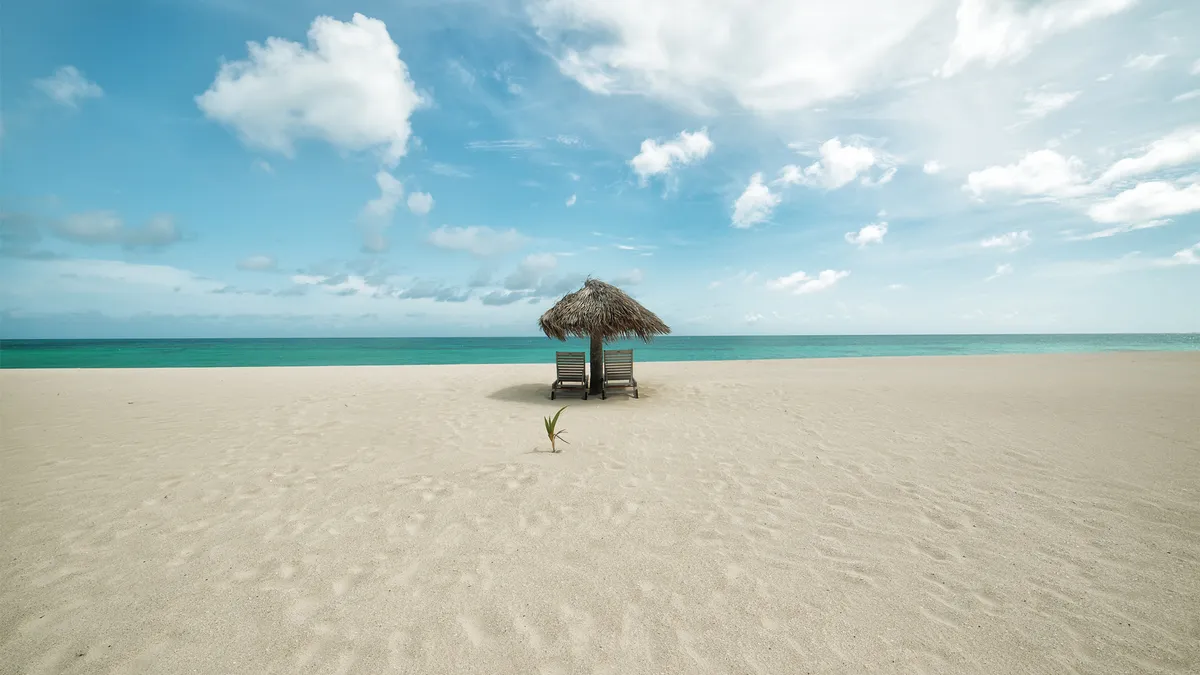
The bucket-list passage is the day sail north to Barbuda, Antigua's flat, sparsely populated sister island, ringed by reefs and home to the famous pink sand beach and the frigate-bird colony in Codrington Lagoon National Park. It is roughly a 30-nautical-mile sail, best done in good weather with local knowledge of the reef approaches. If you would rather not navigate it yourself, a guided Barbuda day trip covers the highlights.
When to Sail and What to Know
The prime sailing season runs from December through April, with the steadiest trade winds and the regatta calendar packed into February to May. Hurricane season runs June to November, when many cruisers head south of the belt; if you sail in those months, watch the forecasts closely. See the Antigua weather guide for month-by-month detail.
- Wind: Easterly trades typically blow 12 to 20 knots, stronger in the winter "Christmas winds." The east coast is breezier and choppier than the protected leeward side.
- Getting here: Most crews fly into V.C. Bird International Airport and taxi to English or Falmouth Harbour. See the transportation guide for getting around on land.
- Drive on the left: Antigua drives on the left, which matters if you rent a car to reach a marina or run provisions.
- Money: The East Caribbean dollar (EC$) is the local currency, with US dollars widely accepted. Have some local cash for small marinas, taxis, and beach bars.
- Other ways on the water: Not into sailing? Antigua also offers scuba diving, deep-sea fishing, kitesurfing and windsurfing on the windward bays, and paddleboarding and kayaking in the calm lagoons.
Round out a sailing trip ashore with the capital, St. John's, the rum heritage behind English Harbour and Cavalier rum, and a plate of the national dish, fungie and pepperpot, after a day on the water.
Frequently Asked Questions
Why is Antigua called the sailing capital of the Caribbean?
Antigua combines steady trade winds, two large protected natural harbours (English and Falmouth), the historic working dockyard at Nelson's Dockyard, and a packed winter racing calendar. Its position at the top of the Leeward Islands also makes it a natural arrival point for Atlantic crossings and a base for island-hopping, which is why so many international yachts gather here each season.
Do I need a sailing license to charter a yacht in Antigua?
For a bareboat charter you generally need a recognized sailing certification and a sailing resume, and the company will brief you before handover. If you do not have certification or experience, you can book a crewed charter with a professional skipper, or join a catamaran day cruise where the crew handles everything and you just enjoy the trip.
When is the best time to go sailing in Antigua?
December through April offers the most reliable trade winds and the driest weather, and the major regattas run from late February to early May. Hurricane season is June to November, when conditions are less settled, so most cruising and racing happens in the winter and spring months.
What are the main sailing events in Antigua?
The three headline events are the RORC Caribbean 600 offshore race in late February, the Antigua Classic Yacht Regatta in mid-April, and Antigua Sailing Week in late April into early May. The Antigua Charter Yacht Show in December also brings the superyacht fleet to the harbours before the winter season.
What is the difference between English Harbour and Falmouth Harbour?
English Harbour is the smaller, historic bay built around Nelson's Dockyard, where clearance and much of the racing scene are based. Falmouth Harbour, just west over a low ridge, is larger and deeper, with the main superyacht anchorage, three marinas, and most of the marine services. Crews routinely move between the two, which sit a short walk apart.
Can you sail from Antigua to Barbuda?
Yes. Barbuda lies roughly 30 nautical miles north and is a popular day sail or overnight passage, known for its pink sand beach and frigate-bird sanctuary in Codrington Lagoon. The reefs around Barbuda require care and local knowledge on the approaches, so it is best attempted in settled weather or as a guided day trip.
Barbuda
This guide covers Barbuda. Explore more about this destination.
View DestinationAbout the Author
Alex Borshch
Founder and editor of the Isla365 network. Spent six months living in the Dominican Republic over the 2013-14 winter, and has since wintered in Thailand, Vietnam and Turkey. Writes and edits the guides across the network.