Things to Do in Antigua: Top Experiences
Things to do in Antigua range from Stingray City and a rainforest zip line to sailing English Harbour and the Sunday steel band at Shirley Heights.
Antigua packs an unusual amount into a 14-mile-wide island. You can swim with stingrays before lunch, zip through rainforest canopy in the afternoon, and watch the sun drop behind the harbour to a steel band by evening. This guide ranks the experiences that actually earn a spot on your itinerary, with honest notes on timing, who each one suits, and how to link them together so you are not crisscrossing the island all week.
Most experiences sit close to one of the main bases: lively Dickenson Bay in the northwest, the historic English Harbour area in the south, the marina village of Jolly Harbour on the west coast, or the capital, St. John's.
Get Out on the Water
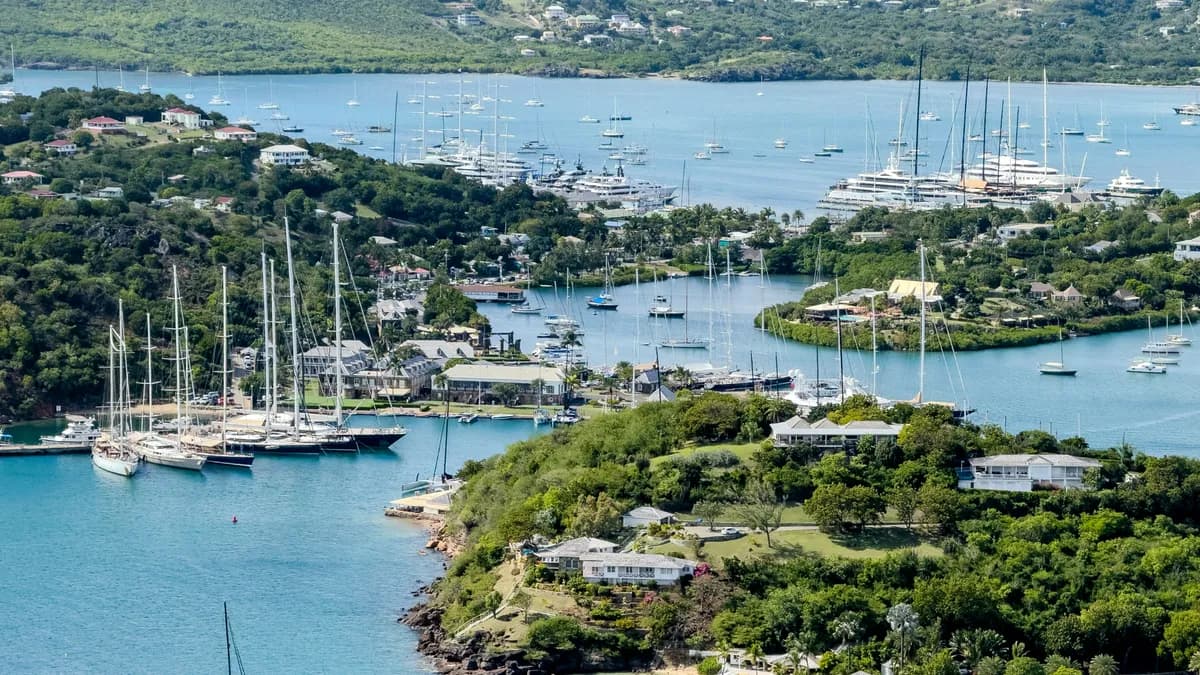
Antigua calls itself the sailing capital of the Caribbean, and the title is earned. Steady trade winds, sheltered bays and a deeply indented coastline make this one of the finest places in the world to sail, and the easiest day to sell to anyone in your group.
Sailing and catamaran cruises
If you do one thing on the water, make it a sail. A catamaran day cruise typically loops part of the coast with stops to swim and snorkel, an open bar and lunch aboard, and it is the most popular full-day outing on the island for good reason. For something more hands-on, a private yacht charter lets you set your own route and pace. Either way you understand quickly why the island hosts Antigua Sailing Week in late April, the Classic Yacht Regatta just before it, and the start of the offshore RORC Caribbean 600 in February.
Stingray City
On a sandbar in the shallow North Sound, Stingray City lets you stand waist-deep and feed and stroke southern stingrays that have grown used to people. Guides explain how to hold and touch them safely, and the water is warm and chest-high, so it suits non-swimmers and kids. Book the Stingray City tour as a half-day; many operators combine it with snorkeling at a nearby reef. It is one of the few memorable wildlife encounters you can do without being a strong swimmer.
Snorkeling and diving
The reefs here are healthy and easy to reach. Snorkeling trips often head for the protected reefs of the North Sound Marine Park and around Great Bird Island, while scuba diving ranges from gentle reef dives to the wreck and wall sites off the south and west coasts. Pigeon Point Beach near English Harbour and the reef off Galleon Beach are good shore-snorkel spots if you would rather not book a boat.
Land Adventures
The interior is greener and hillier than the beach brochures suggest, and some of the island's best experiences happen entirely on land.
The rainforest zip line
In the forested hills above Fig Tree Drive, the Antigua Rainforest Zipline strings a course of cables and aerial bridges through the canopy. The zip line tour mixes longer fast runs with challenge bridges, and it is well run for first-timers and families. Pair it with a slow drive along Fig Tree Drive, the island's lushest road, lined with fruit stands and mango trees, and a stop at Wallings Nature Reserve, Antigua's oldest forest reserve, for a short hike to a hilltop view.
Jeep safari and island tours
To see the parts of the island the resorts skip, take an island jeep safari. These off-road tours bounce through villages and old plantation country, usually taking in Devil's Bridge, the wave-carved limestone arch on the rugged Atlantic coast, and Betty's Hope, a restored colonial-era sugar estate with two original windmill towers. It is the most efficient way to connect the island's scattered historic sites in a single day.
Horseback riding and golf
For a quieter pace, horseback riding tours walk and swim horses along the beach, and the island has solid golf with ocean views. Windier days on the southeast coast suit kitesurfing and windsurfing, while calmer bays are made for paddleboarding and kayaking.
History and the Harbour
The south coast around English Harbour is where Antigua's history is most alive, and it is compact enough to cover in a day.
Nelson's Dockyard
Nelson's Dockyard is the only continuously working Georgian-era naval dockyard in the world and the centerpiece of Nelson's Dockyard National Park, a UNESCO World Heritage Site since 2016. The restored 18th-century buildings now house museums, restaurants, shops and a marina full of superyachts, so it works as both a history lesson and a place to linger over lunch. Walk out to the headland trails for harbour views, and time a visit for the Charter Yacht Show in December to see the dockyard at its busiest.
Shirley Heights on a Sunday
The most famous evening in Antigua happens up the hill at Shirley Heights, the old military lookout above English Harbour. On Sunday afternoons a steel band starts the party around 4pm, a party band takes over later, the barbecue smokes, and the whole crowd turns to watch the sun set over the twin harbours below. There is usually a Thursday session too, but Sunday is the one to plan around. Arrive before sunset to claim a spot on the wall. It is touristy and worth it.
St. John's and the forts
In the capital, the twin white towers of St. John's Cathedral dominate the skyline, and the Museum of Antigua and Barbuda gives a quick, useful primer on the islands' history before you explore. Guarding the harbour entrances, Fort James and Fort Barrington still have their cannons in place and reward a short walk for the coastal views.
Beach Days Worth Planning
With a beach for every day of the year, you could spend a whole trip just chasing sand. A few stand out for what you can do as well as how they look.
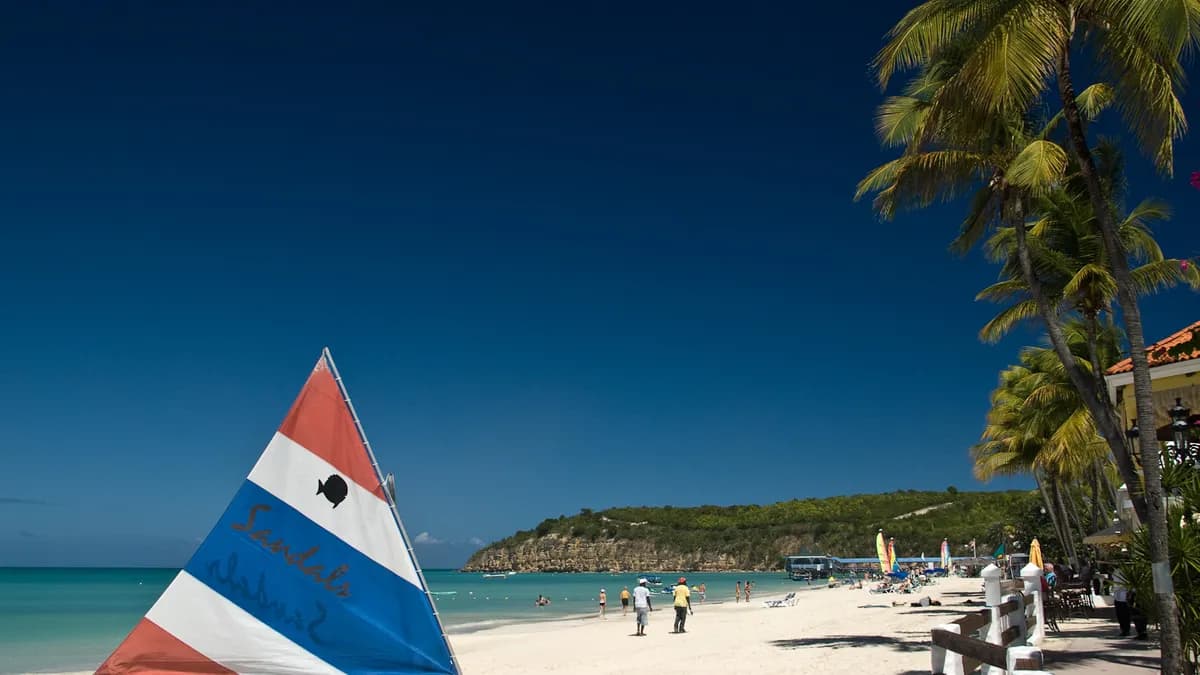
- Dickenson Bay Beach: the busiest in the northwest, with water sports, beach bars and easy access from St. John's.
- Ffryes Beach and neighboring Valley Church Beach: long, calm west-coast stretches with classic sunset views.
- Half Moon Bay Beach: a wild, crescent-shaped Atlantic beach on the east side, good for a walk and bodysurfing.
- Darkwood Beach and Turners Beach: easygoing west-coast bays with simple beach restaurants serving fresh fish.
- Galley Bay Beach: a favorite at sunset and a surf spot when the swell is up.
For a deeper dive on the food side of any beach day, the local plate to seek out is fungie and pepperpot, the national dish, ideally washed down with a cold Wadadli beer or a glass of local rum.
A Day Trip to Barbuda
Antigua's quieter sister island sits about 30 miles north and feels a world away. A Barbuda day trip by boat or short flight delivers two unforgettable sights: the empty, miles-long pink sand beach, tinted by crushed coral, and the Frigate Bird Sanctuary in Codrington Lagoon National Park, one of the largest colonies of frigate birds in the world. You glide by small boat to within a few feet of thousands of nesting birds, the males inflating their bright red throat pouches. It is the most off-the-beaten-path experience the country offers. Read more about the island itself on our Barbuda guide.
How to Fit It Together
You do not need a week to hit the highlights, but a little planning saves a lot of driving on the left-hand roads:
- Anchor the week around Sunday. Build your schedule so you are near English Harbour for Shirley Heights on Sunday evening.
- Group the south coast. Do Nelson's Dockyard, the forts and a snorkel at Galleon Beach on one day, since they are minutes apart.
- Pick one big water day and one big land day. A catamaran cruise or Stingray City for the sea, the zip line or a jeep safari for the land.
- Save Barbuda for a clear-weather day, since the crossing is rougher when the wind is up.
- Check the calendar. Time a visit for Carnival in late July and early August or Sailing Week in late April if you want the island at full volume.
For the practical side, see our notes on getting around, the best time to visit, and a few local tips on tipping, currency and pace.
Frequently Asked Questions
What is the number one thing to do in Antigua?
If you can only pick one, get out on the water. A catamaran day cruise or a sailing trip shows off the coastline that makes Antigua famous, with stops to swim and snorkel along the way. For a single unmissable evening, the Sunday party at Shirley Heights, with its steel band and harbour sunset, is the island's signature night out.
How many days do you need to see Antigua's main attractions?
Four to five days is enough to cover the highlights without rushing. That leaves room for one big water day, one land adventure like the zip line or a jeep safari, a history day around Nelson's Dockyard, a Sunday at Shirley Heights, and a beach day or two. Add a sixth day if you want to fit in a Barbuda day trip.
Is Stingray City in Antigua safe for kids and non-swimmers?
Yes. Stingray City sits on a shallow sandbar where the water is roughly waist to chest deep, and guides show everyone how to feed and touch the rays safely. Because you can stand the whole time, it suits children and people who are not confident swimmers. Most tours also provide life vests and snorkel gear for the reef portion.
What day is the Shirley Heights party in Antigua?
The famous barbecue and steel-band party runs on Sunday afternoons and evenings, with the steel band starting around 4pm, a party band later, and the crowd gathering on the wall for sunset. There is usually a second session on Thursdays as well, but Sunday is the bigger event. Arrive before sunset to get a good spot.
Is a day trip to Barbuda worth it from Antigua?
For travelers who value nature and solitude, yes. Barbuda delivers an almost empty pink-tinged beach that stretches for miles and a close-up boat visit to one of the world's largest frigate bird colonies, both of which you cannot see on Antigua. The crossing takes longer when the wind is up, so pick a calm-weather day and book a full-day tour.
What is the best way to get around Antigua for sightseeing?
Renting a car gives you the most freedom, though remember you drive on the left and will need a local temporary permit, usually arranged through the rental agency. Guided tours and jeep safaris are a good alternative if you would rather not drive, and taxis have set government rates between major points. See our transportation guide for current details before you book.
Dickenson Bay & the North
This guide covers Dickenson Bay & the North. Explore more about this destination.
View DestinationAbout the Author
Alex Borshch
Founder and editor of the Isla365 network. Spent six months living in the Dominican Republic over the 2013-14 winter, and has since wintered in Thailand, Vietnam and Turkey. Writes and edits the guides across the network.